Leaf II of V / Spring
The Thaw Walk
Snow pulls back from the fence line and the evenings stretch. The second leaf is the season of coming back, one street at a time.
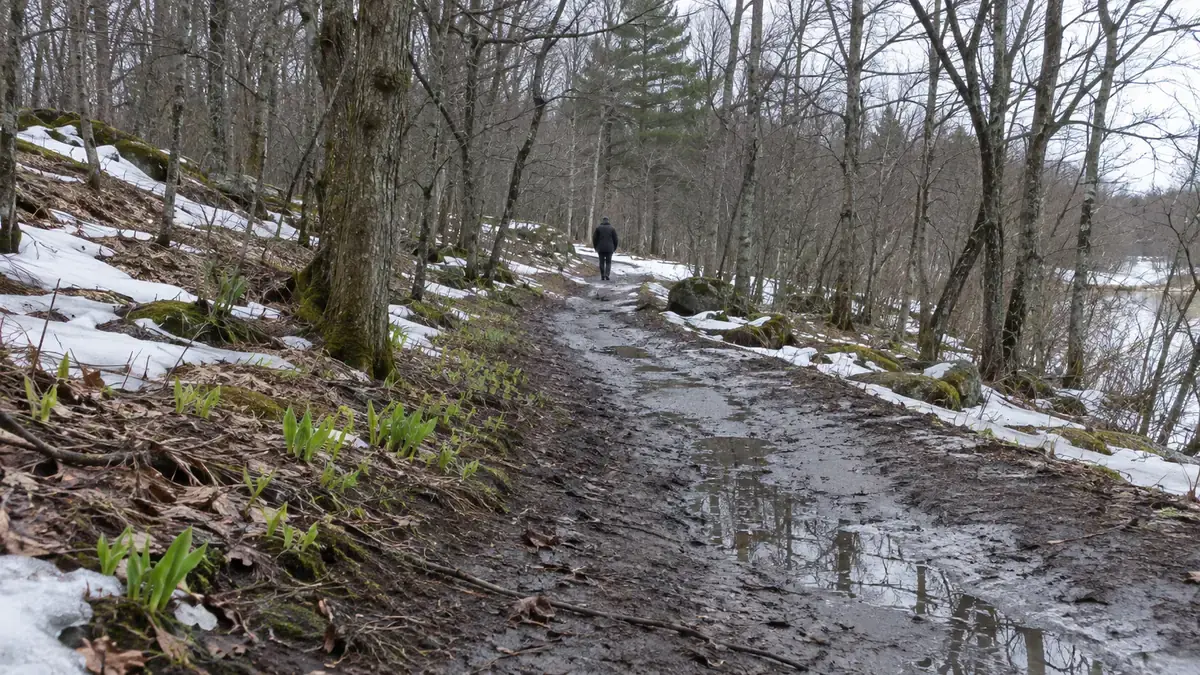
Somewhere in March the second leaf turns, and the yard shows it before the calendar does. Snow pulls back from the fence line, the ground goes soft underfoot, and the evenings stretch far enough that a man getting home from work can still see the end of his driveway. It is the season of coming back.
After months of short days, most men reach spring having moved less than they meant to. The legs know it on the first afternoon of yard work: the rake feels heavier, the attic stairs seem to count themselves, and Monday arrives with a stiffness that was not there in October. The mistake this leaf wants you to avoid is trying to win back four months in a single weekend.
Let the walk grow with the light
The habit for this leaf is a walk that lengthens as the days do. Begin with a loop you could finish without thinking about it, fifteen or twenty minutes at a pace where talking stays easy. Each week, add a few minutes or one more street. By the end of May the walk may be twice as long as it was in March, and it will have got there without a single sore Tuesday. Many men find that a walk in the early evening, after work and before the night settles in, takes the edge off the late-afternoon slump and makes the hours before bed calmer.
Uneven ground helps. A dirt path, a park trail or the grass along a ball field asks more of the ankles and hips than pavement does, in a good way, as long as the pace stays gentle and the shoes have some grip.
The clocks jump, the body follows slowly
On the second Sunday of March most of the country moves its clocks forward an hour. On paper it is one hour. In practice plenty of men feel it for most of a week: the alarm sounds far too early and the evening refuses to end. The almanac's answer is to move bedtime fifteen minutes earlier on each of the four nights before the change, and to get outdoors early on the Monday after it, when morning light does the most to reset the day.
Yard work counts
Spring is also when the outdoor chores return. Hauling bags of mulch, turning beds, clearing gutters and dragging the mower out of the shed are real work for the back, the shoulders and the grip. Spread them over several short sessions instead of one long Saturday, warm up with a few minutes of walking first, and lift with the legs. The garden will not grade you on speed, and a man who is still moving easily on Sunday evening has done the job right.
Pencilled in the margin
Note the length of each week's walk on the leaf, in minutes. A column of numbers that rises slowly is more convincing than any resolution made in January.
Before the next leaf
- A walk at least four days a week, a little longer each week than the last.
- Some of it on dirt, grass or trail instead of pavement.
- Bedtime moved earlier in small steps before the March clock change.
- Heavy yard work split into short sessions, with a warm-up walk first.
Nothing on this leaf is medical advice. If you have been mostly inactive for a long time, take medication, or feel pain or unusual breathlessness when you move, ask your doctor what pace is right for you before you build up.